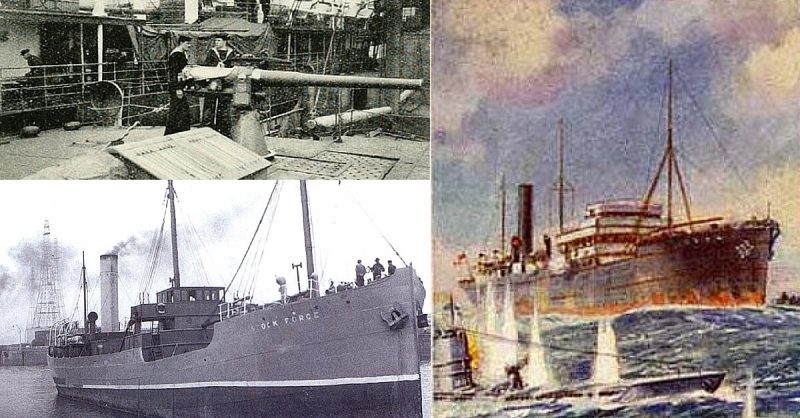

At the end of July 1918, with the First World War entering its final months, HMS Stock Force was operating in the English Channel under the command of Lieutenant Harold Auten of the Royal Navy Reserve. To any observer, she looked like a harmless merchant steamer. In reality, she was a Q-ship… a warship disguised as bait.
The Q-Ship
Q-ships were created to counter the growing threat posed by German U-boats. Submarines were difficult to engage unless they surfaced, so the Royal Navy’s answer was deception. Q-ships pretended to be slow, weak, and undefended, tempting submarines to close in before revealing their hidden guns.
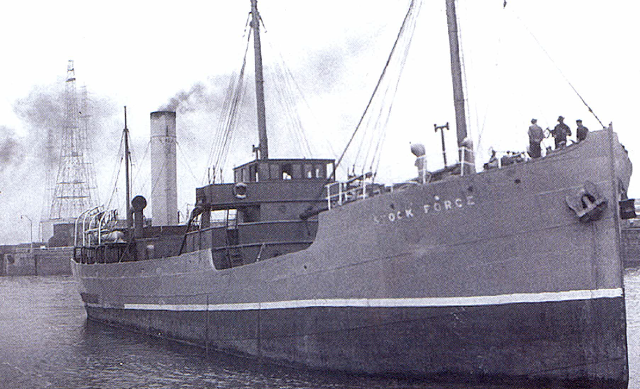
On the evening of 30 July 1918, Stock Force achieved exactly that. At around 5 pm, some 25 nautical miles off the Devon coast, she was struck by a torpedo fired by a German U-boat. The blast tore into her forward section, throwing debris high into the air, injuring crewmen, and disabling her forward gun. Her bow began to sink.
The Lure
Below decks, the ship’s doctor, Surgeon Probationer G. E. Strahan, worked waist-deep in flooding seawater as wounded men were brought to him. Above, the crew began the next stage of the deception. A “panic party” was ordered over the side. Their task was to make a convincing show of abandoning ship, encouraging the submarine to surface and finish the job.
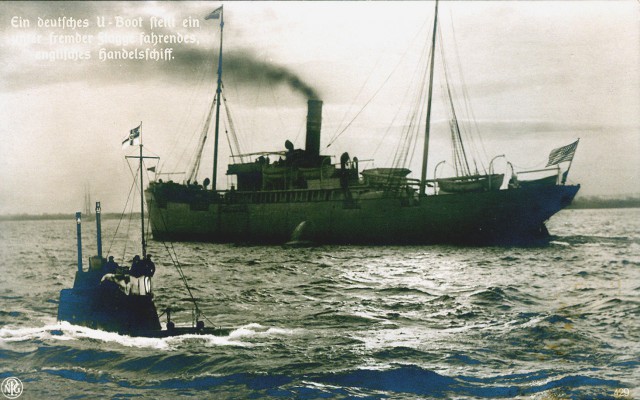
The panic party, led by Lieutenant Workman, himself already wounded, pulled away in small boats. Soon after, the dark shape of the U-boat broke the surface about half a mile away.
Auten remained on board. The crews of the two remaining hidden guns stayed out of sight. For nearly forty minutes, nothing happened. In the shattered bow, one gunner lay trapped beneath wreckage as the water rose around him. No rescue was attempted. Any movement risked revealing the trap.
The Bait
When the U-boat saw the boats turn back towards the stricken ship, its captain took the bait. The submarine closed in slowly, coming alongside Stock Force at a range of just 300 yards. Only when the U-boat was perfectly positioned did Auten give the order.
The deception ended instantly.
The first shell destroyed the submarine’s periscope. The second tore apart the conning tower. The third ripped into the hull at the waterline. With no chance to respond, the U-boat began to sink, her bow lifting as water poured in. Stock Force’s guns continued firing until the submarine vanished beneath the surface.
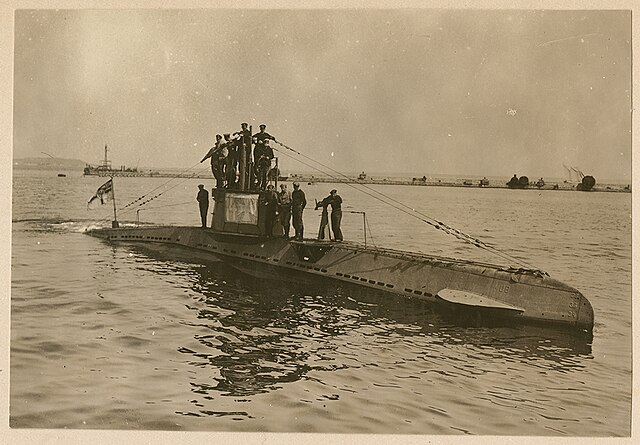
Despite her victory, Stock Force was fatally wounded. For nearly four hours her crew fought to keep her afloat until rescue vessels arrived. As the men were taken off, the battered ship finally slipped under the waves, her ensign still flying.

Top Secret
The trapped gunner was pulled free at the last moment, close to drowning, and later praised for his courage. Auten’s calm leadership and the discipline of his crew had turned a near-fatal attack into a decisive victory.
Because Q-ships were still secret, little detail was released when Harold Auten was awarded the Victoria Cross. Only later did the full story emerge. After the war, Auten wrote about his experiences, appeared in a silent film portraying the action, and went on to serve again during the Second World War.
He survived both conflicts and spent his later years in the United States, dying in 1964 at the age of 73. The action of HMS Stock Force remains one of the clearest examples of how