
The moral problem facing the Royal Navy in the summer of 1940 had no clean answer, and nowhere was that clearer than at Mers-el-Kébir.
Armistice
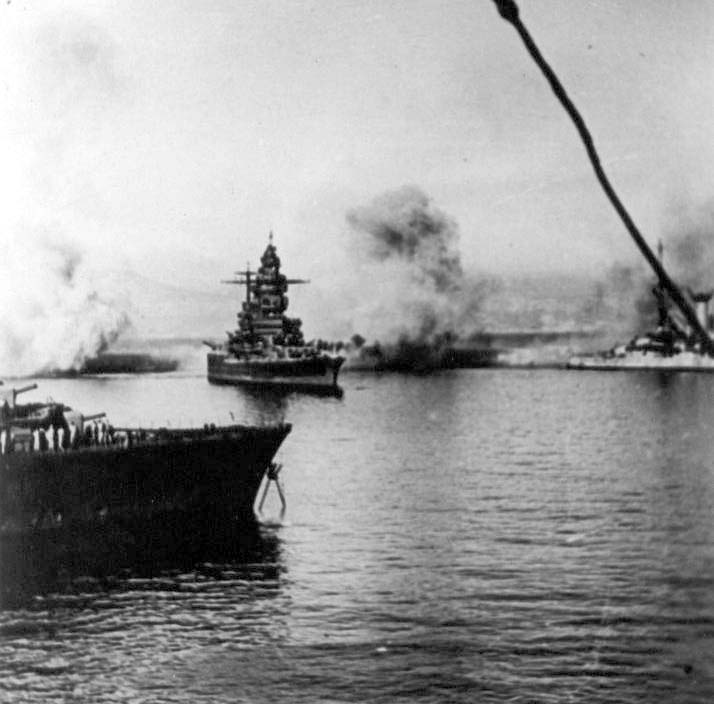
On 3 July 1940, just days after France signed its armistice with Germany and Italy, British warships opened fire on the French fleet anchored at Mers-el-Kébir near Oran in French Algeria. The action, now known as the Battle of Mers-el-Kébir, was the most dramatic and controversial part of Operation Catapult.

From the British perspective, the situation was stark. France was defeated. Britain stood alone. The French Navy was the second largest concentration of capital ships in Europe after the Royal Navy, including modern battleships of the Bretagne class and the fast Dunkerque and Richelieu classes. If even a portion of that fleet fell under German control, Britain’s survival at sea … and possibly as a nation … would be placed in serious doubt.
The armistice terms claimed that French ships would not be handed over to Germany, but to British eyes those assurances were fragile. Britain had already seen promises broken across Europe. There was no mechanism to enforce French guarantees, and no margin for error. The Royal Navy could not afford to gamble on trust.
Negotiations
For the French sailors at Mers-el-Kébir, the situation looked very different. France had stopped fighting. The fleet was still under French control. To them, the British ultimatum … sail to Britain, scuttle the ships, or be destroyed … felt like coercion delivered at gunpoint. Negotiations dragged on, misunderstandings piled up, and time ran out.


When the guns opened fire, the consequences were immediate and devastating. Over 1,200 French servicemen were killed. The battleship Bretagne was sunk, others were badly damaged, and a fleet that had once been an ally lay shattered. French aircraft later bombed Gibraltar in retaliation, and bitterness lingered long after the shells stopped falling.
Morally, the attack sits in deeply uncomfortable territory. Britain attacked the navy of a former ally that was not, at that moment, an active enemy. French sailors died not because they were fighting Britain, but because Britain feared what might happen next. For many in France, it was seen as a betrayal, and it hardened attitudes against Britain at a critical moment.
Sunk
Could it have been avoided? Possibly… but only in theory. Better communication, more time, or different diplomatic handling might have led to a peaceful resolution. Yet time was exactly what Britain believed it did not have. The fear was not what the French Navy intended to do, but what Germany might force it to do later.

In the end, Mers-el-Kébir was a decision made under extreme pressure, driven by survival rather than honour. Strategically, it sent a clear signal to Germany that Britain would fight on at any cost. Morally, it left a scar that never fully healed.
It remains one of the most painful episodes of the war at sea… a moment where necessity, fear, and loyalty collided, and where every available choice carried blood on it.